
The autoimmune Blueprint story is organized into three functional areas practitioners can use to explain the patient picture.
Autoimmune
0 areas
0 pathways
0 phases
Why genetics matters in autoimmune care.
The Blueprint frames autoimmune risk through functional systems, not a single isolated pathway.
Genetic variation can shape how the immune system behaves, how it tolerates triggers, and how a patient responds to therapy. The 3X4 Blueprint turns that complexity into a pathway story practitioners can use in conversation and planning.
For autoimmune conditions, the Blueprint groups the most relevant pathways into three functional areas: immune activation and inflammation, immune tolerance and detoxification, and tissue damage and hormonal contribution.
Eight pathway topics are explicitly called out as relevant contributors to autoimmune vulnerability and flare patterns.
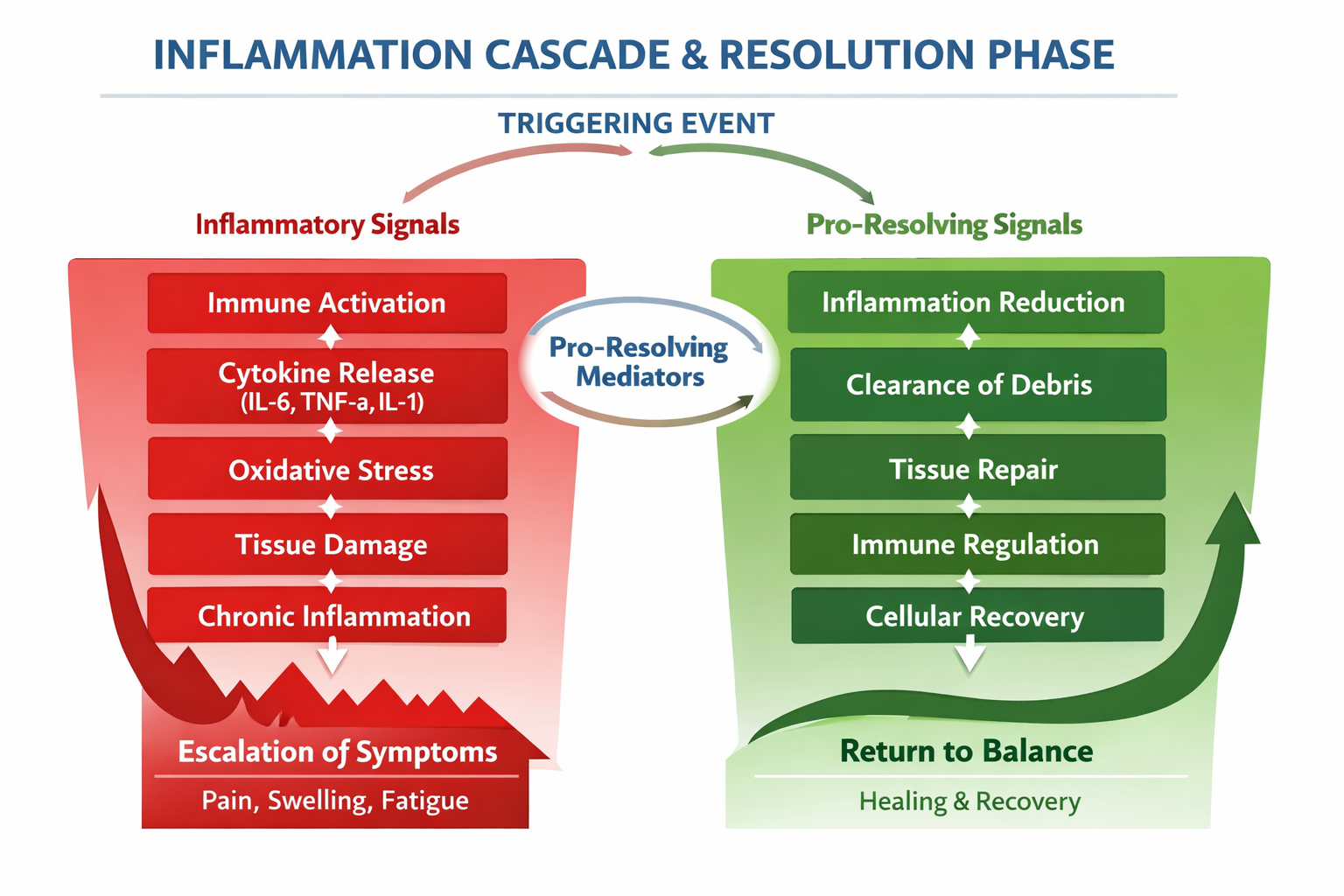
The inflammatory cascade is paired with a resolution phase, reinforcing the Blueprint emphasis on balance and recovery.
Built to help practitioners explain autoimmune pathway patterns in a clearer, more connected way.
Three functional areas
Use the Blueprint to organize autoimmune conversations.
The Blueprint does not describe a single autoimmune pathway. It shows how several pathways converge around immune dysregulation and chronic inflammatory signaling.
Functional area
Immune activation and inflammation
Gene variants in this pathway are associated with triggering inflammation, mounting the inflammatory cascade, and impaired resolution of inflammation.
Most autoimmune diseases share a chronic pro-inflammatory predisposition.
Functional area
Immune tolerance and detoxification
Methylation supports cytokine control, T-regulatory cell activity, and co-factors for histamine degradation enzymes. Detoxification pathways affect the clearance of toxins and active metabolites.
Vitamin D is also positioned as an immune-signaling pathway that supports T-regulatory function.
Functional area
Tissue damage and hormonal contribution
Oxidative stress pathways relate to reduced clearance of ROS, NOS, and toxins that can perpetuate tissue damage. Hormone balance pathways influence the manufacture and clearance of steroid hormones across the life cycle.
Together, these pathways describe how ongoing damage and hormonal context can sustain autoimmune pressure.
Why networks matter more than variants
Biological coherence creates clinical relevance.
The Blueprint frames autoimmune through connected systems rather than a single SNP story.
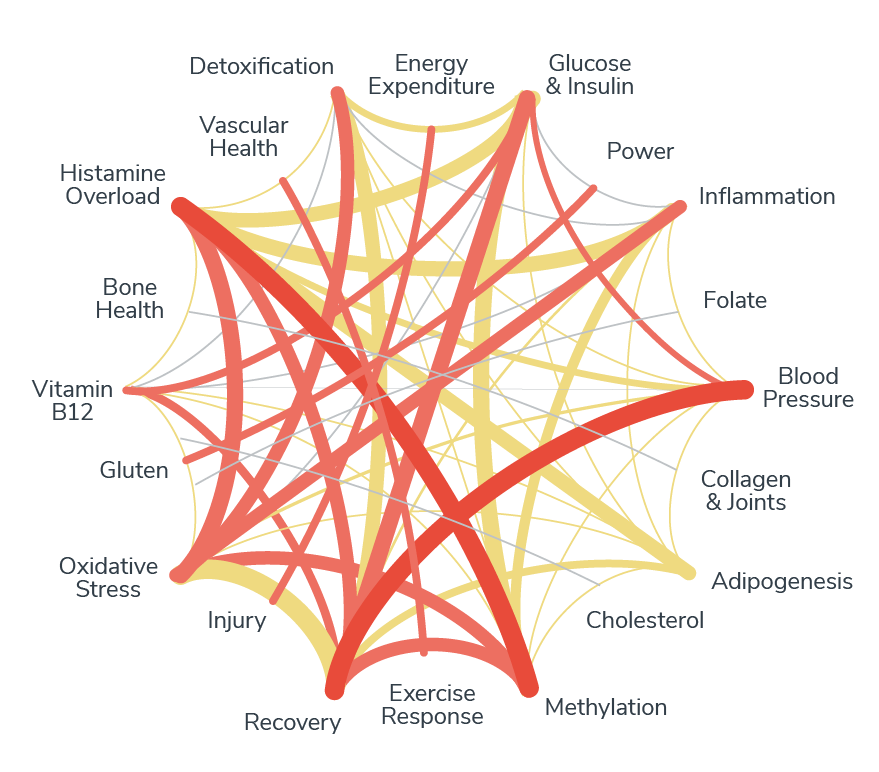
Autoimmune conditions are influenced by multiple variants rather than a single isolated change.
Biological networks create the clinical story by connecting variants to one another.
When pathway behavior matches symptoms, the conversation becomes more actionable for practitioners and patients.
No single autoimmune pathway
The 3X4 Blueprint does not claim one autoimmune pathway. It identifies several pathways that influence immune dysregulation and chronic inflammatory signaling.
Use systems language with patients
This network view helps practitioners explain why multiple pathways can amplify vulnerability without claiming that genetics alone causes disease.
Pathways highlighted in the Blueprint
These pathway topics support the autoimmune narrative.
Histamine overload, gluten sensitivity, methylation, detoxification, vitamin D, oxidative stress, and hormone balance are all highlighted as clinically relevant contributors.
Inflammation
Core immune driver associated with chronic pro-inflammatory predisposition and inflammatory signaling.
The Blueprint positions this as the main entry point into autoimmune vulnerability.
Histamine overload
Slower histamine degradation can contribute to immune activation, reduced tolerance, gastrointestinal permeability, and inflammatory flares.
This is presented as an overlooked but highly relevant contributor to chronic immune activation.
Methylation
Supports cytokine control, T-regulatory cell activity, and co-factors for histamine degradation enzymes.
The autoimmune framing links methylation directly to immune tolerance.
Detoxification
Slower clearance of toxins and active metabolites can raise inflammatory load and immune activation.
Accumulation of active metabolites is presented as another driver of inflammatory burden.
Vitamin D
Associated with vitamin D activation, transport, and utilization as part of immune signaling and T-regulatory function.
The Blueprint emphasizes vitamin D as an immune-signaling hormone pathway, not just a nutrient pathway.
Oxidative stress
Reduced clearance of ROS, NOS, and toxins may contribute to tissue damage and perpetuate the inflammatory cycle.
This pathway is grouped under tissue damage and hormonal contribution.
Hormone balance
Influences the manufacture and clearance of steroid hormones, including progesterone, cortisol, testosterone, and estrogen.
The Blueprint ties autoimmune expression to the hormonal environment across the life cycle.
Gluten
Genetic sensitivity to gluten can affect gut permeability, inflammation, and immune cross-reactivity.
This autoimmune pathway framing connects gluten sensitivity to the gut barrier and immune tolerance.
Inflammation cascade and resolution phase
Autoimmune pressure is presented as an imbalance between escalation and recovery.
This visual contrasts inflammatory signals with pro-resolving signals to show how chronic symptoms emerge when immune activation outpaces regulation and tissue repair.
This framework helps practitioners explain how pathway vulnerabilities can amplify the response to a triggering event.
The visual explicitly includes pro-resolving mediators, reinforcing that recovery pathways belong in the same story.
Escalation of symptoms
Immune activation, cytokine release, oxidative stress, tissue damage, and chronic inflammation are shown as the upward pressure that can drive pain, swelling, and fatigue.
Return to balance
Inflammation reduction, debris clearance, tissue repair, immune regulation, and cellular recovery represent the balancing side of the pathway story.
Links to autoimmune related resources
Resource placeholders for the autoimmune landing page.
This section is ready for approved autoimmune links, sample materials, and practitioner resources.
3X4 Practitioner Interactive Blueprint
Open the sample Blueprint for a direct view of the pathway format referenced on this page.
Open the sample BlueprintPractitioner FAQ
Review the practitioner FAQ for getting started, ordering kits, and support questions.
Review the practitioner FAQ3X4 Community
Visit the community page for mentorship, education, and implementation support.
Visit the community pageDiscovery call
Book a discovery call if you want to discuss condition-page rollout or clinic fit.
Book a discovery call
Next step
Use the autoimmune page as the template for future condition-specific landing pages.
The Blueprint is organized around pathways, not a single pathway label. That makes it a strong base for a reusable specialty-page system.
Book a discovery call