
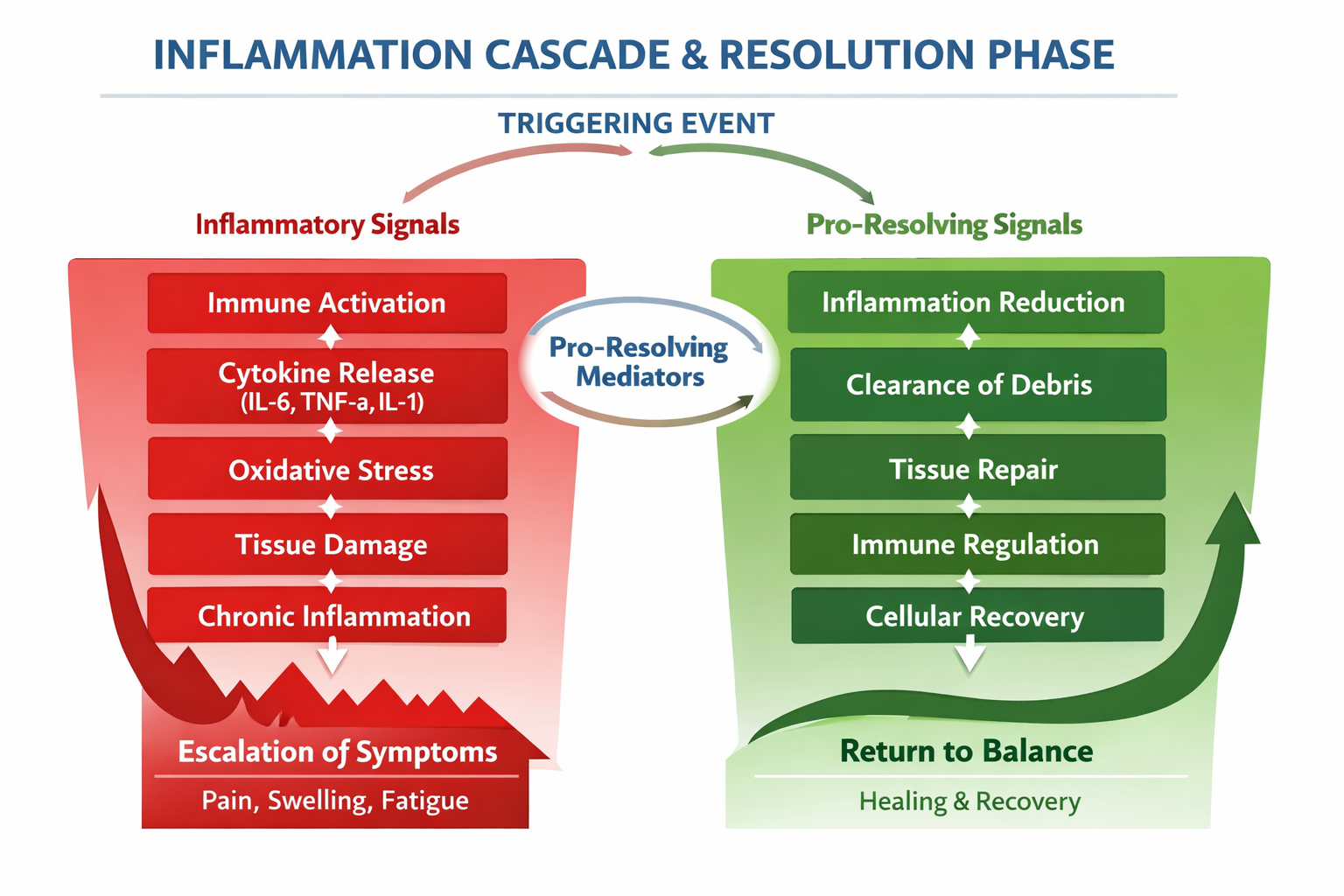
Inflammation can affect hormone balance, detoxification can influence inflammatory burden, methylation can shape immune regulation, and metabolic strain can compound the wider picture.
Condition pages
The 3X4 Blueprint is most useful when pathways are read as a connected system.
This hub starts with the Blueprint story, then routes practitioners into condition-specific pages.
The 3X4 Blueprint is not just a list of isolated pathways. It is designed to show how inflammation, detoxification, methylation, hormones, oxidative stress, energy regulation, and other systems influence one another and create a more complete clinical picture.
When those pathway relationships are made visible, practitioners can organize consults more clearly, identify where the strongest drivers may sit, and explain to patients why a personalized plan needs more than one lever.
Blueprint-first interpretation makes the condition pages more useful for both practitioner guidance and patient explanation.
How the Blueprint works
Pathways connect, overlap, and shape the same patient story together.
The Blueprint helps practitioners move away from one-pathway thinking and toward a connected model of how the body is responding.
When practitioners can see how pathways interact, it becomes easier to decide what deserves emphasis first and how to explain the relationship between systems.
A connected Blueprint story helps patients understand why their plan may involve multiple priorities instead of one isolated recommendation.
Genetics gives the practitioner a more stable starting point
Genetics helps explain predisposition and pathway tendency before symptoms are reduced to guesswork alone. The Blueprint uses that genetic context to make the consult more personalized, more teachable, and easier to structure.
A better explanation improves confidence and follow-through
When patients can see why a plan is personalized to their pathway pattern, the next steps feel more grounded and less generic.
Why this format works
Genetics matters because it helps turn a condition conversation into a personalized pathway conversation.
Each live page uses the same Blueprint-led logic so the practitioner can move from pathway interpretation to patient explanation with a consistent structure.
Why genetics matters
Show predisposition before the story gets lost in symptoms
Genetic pathway context helps practitioners understand why some patterns may keep appearing across the patient journey.
That creates a more defensible starting point for the consult.
Why it helps practitioners
Organize the condition story around the strongest pathway themes
The page structure keeps the consult centered on what matters most for that condition instead of forcing a generic genetics explanation.
The result is less guesswork and a cleaner clinical narrative.
Why it helps patients
Explain the why in language patients can follow
Each page helps practitioners translate pathway patterns into language patients can actually follow and act on.
That improves understanding, buy-in, and next-step clarity.
Condition focuses
Explore the condition-specific landing pages.
These are the main focus pages. Each one applies the same Blueprint-led logic to a different clinical conversation so the practitioner and patient can move through a clearer, more personalized story.
Live page
Autoimmune
The Blueprint frames autoimmune risk through functional systems, not a single isolated pathway.
Open Autoimmune
Live page
Cognitive Decline
The value is a clearer story for both the practitioner and the patient.
Open Cognitive Decline
Live page
Dentistry
The Blueprint helps frame oral health as a systems conversation that supports better patient understanding.
Open Dentistry
Live page
Fertility
The Blueprint helps translate complex fertility patterns into a story practitioners and patients can act on together.
Open Fertility
Live page
Gut Health
The report helps turn a complex digestive story into a practical consult. It helps practitioners organize the consult and gives patients a clearer explanation of the plan.
Open Gut Health
Live page
Heart Disease
The report helps practitioners communicate risk without reducing the patient to a single marker.
Open Heart Disease
Live page
Hormones
The report helps practitioners bring structure to a complex endocrine conversation.
Open Hormones
Live page
Longevity
The Blueprint helps clinicians explain why long-term health is a systems conversation, not a single-biomarker conversation.
Open Longevity
Live page
Mental Health
The report helps translate complexity into a clearer patient story.
Open Mental Health
Live page
Musculoskeletal care
The Blueprint helps practitioners explain why pain, healing, and activity tolerance can vary so much from patient to patient.
Open Musculoskeletal care
Live page
Oncology
The value is not a single result, but a clearer clinical story. It helps practitioners organize the consult and gives patients a clearer explanation of the plan.
Open Oncology
Live page
Pediatrics health
The Blueprint helps clinicians surface patterns without overwhelming families with unnecessary detail.
Open Pediatrics health
Live page
Weight management
The Blueprint helps clinicians explain why weight is influenced by more than willpower or a single habit.
Open Weight management
Next step
Use the same Blueprint-led structure across every condition page.
The library starts with autoimmune and expands from there. Each new condition page should stay focused on pathway interpretation, practitioner guidance, and patient-friendly explanation.
Open autoimmune